Principles and definitions
Macrocosm and microcosm: as above, so below
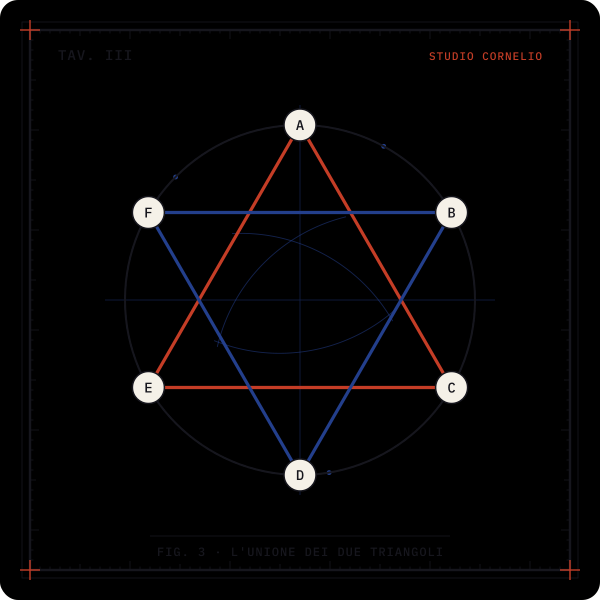
The human being as a small world reflecting the great world: the principle that grounds every correspondence, explained by Maestro Cornelio through the hexagram.
The whole science of correspondences rests on an ancient intuition that Maestro Cornelio considers the keystone of the teaching: the human being is a small world, and the world is a great human being. Tradition calls them microcosm and macrocosm, and the Emerald Tablet attributed to Hermes gave the principle its most famous formula: that which is below is like that which is above, and that which is above is like that which is below.
Two worlds, one structure
The Master explains the principle with a simple example. In the universe there are forces that expand and forces that contract, cycles of growth and decline, centres around which whole systems revolve. In the human being the same happens: there are surges and withdrawals, seasons of life, a centre around which thoughts and actions revolve. These are not poetic resemblances but a shared structure. Knowing one helps us know the other.
Why correspondences work
This is what makes correspondences possible at all. If the human being and the universe share the same structure, then every element of one has a counterpart in the other: a planet corresponds to a faculty, an element to a temperament, a number to a quality. The tables of the tradition are the dictionary of this shared language. The Master teaches us to use them not out of superstition, but as one uses exact metaphors: to see what would otherwise remain invisible.
That which is below is like that which is above, and that which is above is like that which is below.
The hexagram
The figure tradition chose to represent this principle is the hexagram, the six-pointed star formed by two interlaced triangles. The triangle pointing upwards stands for what rises, fire, aspiration; the one pointing downwards for what descends, water, grace. Interlaced, they do not cancel each other out: they form a new figure, more stable and more complete than either. The plate for this entry draws them in two colours, so that one can see they remain distinct even in union.
The centre that unites
The Master draws attention to the centre of the hexagram, the empty hexagon formed where the triangles cross. That is where above and below meet. In the human being, that centre is the heart: the place where the aspiration towards the infinite and the care of the concrete world stop contradicting each other. Whoever lives only upwards becomes abstract and remote; whoever lives only downwards shuts themselves up in things. The centre of the hexagram is the measure of balance.
Five and six
Tradition often places the hexagram beside the pentagram, the five-pointed star. The Master explains the pair as follows: five is the number of the human being, with four limbs and a head, the four elements governed by spirit; six is the number of the universe, the balance of cosmic forces. When the human being realises within the harmony of the cosmos, five is united with six. It is the image of the Great Work: the microcosm becoming a clear mirror of the macrocosm.
A practice of observation
The Studio links an exercise of observation to this principle. For a week, every evening, note down a natural phenomenon observed during the day, the weather, the moon, a plant, and beside it an inner movement from the same day. The point is not to invent links but to notice those that present themselves. After a while, the Master teaches, the notebook becomes a small personal table of correspondences: lived proof that the small world and the great world speak the same language.
Watch the video
Read next
What magic is: the science and art of Will
The definition Maestro Cornelio places at the foundation of the whole teaching: magic is the science and art of causing change in conformity with Will.
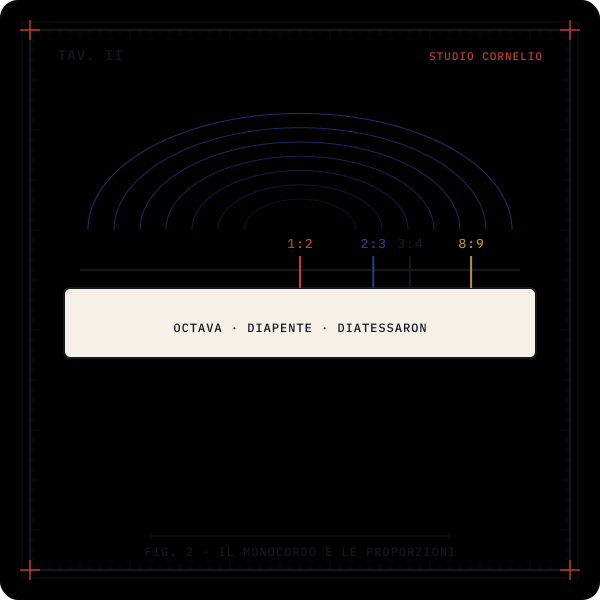
The principles of magic: the fundamental rules
From the definition follow a few rules: every intentional act is magical, every failure reveals a neglected condition, every being has the right to fulfil its own Will.
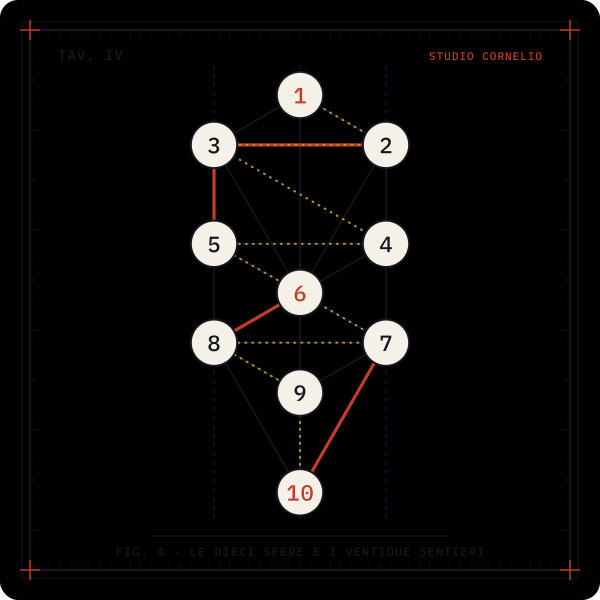
The Tree of Life: ten spheres, twenty-two paths
The great map of the tradition: ten spheres, twenty-two paths, three pillars. How Maestro Cornelio teaches us to read the Tree of Life as a chart of the universe and of the soul.
